28th Jul 2015
Norcold Refrigerator Ventilation (How Important Is the Venting?)
HOW IT WORKS · VENTILATION
Norcold Refrigerator Ventilation (How Important Is the Venting?)
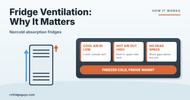
Very important. Poor venting is one of the most common reasons an absorption fridge cools badly, especially in hot weather.
The short version
- Cool air comes in through the lower outside vent, passes over the cooling unit, and leaves through the roof vent or upper side vent.
- Any gap or dead space above the unit traps hot air. Block it off.
- Classic symptom of bad venting: freezer cold, fridge warm.
- In hot climates, add a rear cooling fan.
Why venting matters
Your fridge has an absorption cooling unit. Cooling starts with heat at the back right of the unit (looking from outside): the electric heating element or the propane burner. The ammonia vapor rises up to the top of the cooling unit, where you’ll see a set of closely spaced fins. These are the condenser fins. Air moving across them cools the vapor back into liquid, which then flows by gravity through the freezer first and then the fridge.
If air can’t move across those fins, less liquid forms. The freezer still gets some cooling, but the fridge section doesn’t get enough. That’s why poor venting typically shows up as a cold freezer and a warm fridge, and why it gets much worse when it’s hot outside or the RV sits in the sun.
Ventilation checklist
- Lower vent at the floor: on Norcold N6/N8 models the bottom of the lower vent must be at or below floor level, so cool air enters at the bottom of the unit.
- Upper vent high: a roof vent, or an upper side-wall vent. With two side vents on the N6/N8, Norcold specifies the top of the upper vent at least 55 in. (N6) or 62 in. (N8) above the floor.
- No dead space: block any gap of 1-1/2 in. or more above the unit so hot air can’t collect there. Baffles should guide air over the fins, not around them.
- Keep it clear: nests, leaves, insulation or stored items behind the fridge all choke the airflow. Check after storage.
- Rear fan in hot climates: a 12V fan near the condenser fins moves air when natural draft isn’t enough.
Need sizes? See Norcold vent cutout sizes (side and roof vents).
Norcold installation spec sheets
Norcold’s installation drawings for absorption refrigerators with a roof vent and with double side-wall vents:


Parts for this repair
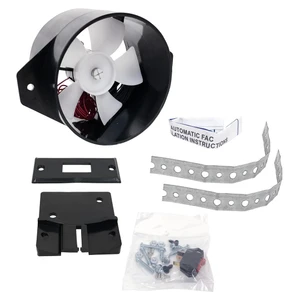 Valterra A10-2618VP Cooling Unit Fan (Dometic / Norcold)View part →
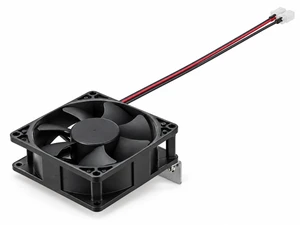 Norcold Cooling Unit Fan 639702 (N7 / N8 / N10)View part →
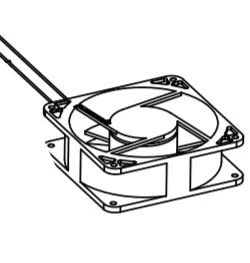 Norcold Upper Fan Kit 637154 (2118)View part →
 Norcold DC Fan Thermostat 618093 (models with fans)View part →
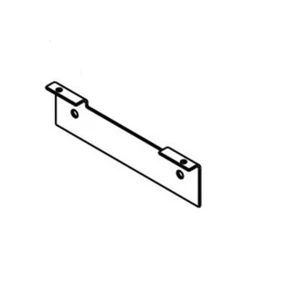 Norcold Cooling Fan Mounting Bracket 628747View part →
Shop by category: Norcold roof and side vents, Norcold fans.
FAQ
How do I know if my RV fridge has a ventilation problem?
The freezer stays cold but the fridge section is warm, especially on hot days. Also look for blocked vents or a big empty space above the cooling unit.
Does an RV refrigerator need a roof vent?
It needs a high exhaust vent: either a roof vent or an upper side-wall vent, plus a lower intake vent.
Should I add a fan behind my RV fridge?
If you camp in hot weather, yes. A thermostat-controlled 12V fan pulls hot air off the condenser fins.
Still stuck? Ask a tech with your model, serial number and what you’ve found. We’ll confirm the part before you order.
Vent specs from the Norcold N600/N800 service manual. Updated October 2026.