8th Nov 2026
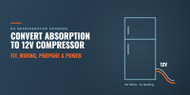
Converting an RV Absorption Refrigerator to 12V: Fit, Wiring, Propane and Power
Swapping a propane absorption fridge for a 12V compressor fridge is one of the most common RV upgrades. The fridge itself usually slides into the same opening. The work is in three places: capping the propane line safely, giving the new fridge a heavy 12V circuit, and making sure your batteries can keep up.
In this guide
1. Is converting right for you?
- Good fit: you camp on hookups, or you have a healthy lithium bank and solar; you’re tired of leveling, lighting and summer cooling problems; your absorption cooling unit has failed.
- Think twice: you boondock for days on a small lead-acid battery with little solar. An absorption fridge on propane barely touches the battery, and a 12V fridge draws from it all day and night.
Not sure? Read What type of RV refrigerator is best: DC compressor or gas absorption and Repair or replace your RV fridge.
2. Pick a 12V fridge that fits your opening
Measure the opening (height, width and depth), not the old fridge. These 12V models are built for the same openings as common absorption fridges:
| If you have this absorption fridge | Opening (H x W x D) | 12V fridges built for it |
|---|---|---|
| Dometic DM2852 / 2862 / 2872 / 2882, RM2852 / 2862 (8 cu ft) | 59-15/16 x 23-11/16 x 24 in | Dometic DMC4101 (10 cu ft) |
| Dometic DM2652 / 2662 / 2672 / 2682, RM2652 / 2662 (6 cu ft) | 53-3/4 x 23-11/16 x 24 in | Dometic DMC4081 (8 cu ft) |
| Norcold N8X / N8LX (8 cu ft) | 59-7/8 x 23-1/2 x 24 in | Norcold N10DC (10 cu ft), Furrion Arctic 10 |
| Norcold N7X / N7LX (7 cu ft) | 52-7/8 x 23-1/2 x 24 in | Norcold N8DC (8 cu ft) |
| Norcold 1200 / 1210 (12 cu ft four-door) | See the article | Norcold N15DCSS |
Other sizes and brands: cutout sizes for every Norcold, Dometic, Furrion, InVision and GE fridge, Find a Fridge by Size and the Norcold Replacement Finder. Always check the new fridge’s own installation manual for its exact enclosure size before cutting anything.
3. Make sure your power system can keep up
- Batteries and solar: the fridge runs around the clock, so work out the daily load before you buy. See How much battery and solar does a 12V RV refrigerator need.
- Converter or charger: on shore power it carries the fridge plus everything else on 12V. An old or undersized converter is a common source of low voltage.
- Low-voltage cut-out: every 12V fridge shuts itself off to protect the battery. The Dometic DMC, for example, cuts out at 10.4V and restarts at 11.7V. Voltage lost in the wiring counts against you.
4. Remove the absorption fridge and cap the propane
- Turn the fridge off and close the propane at the tank.
- Shut off the 120V breaker and the 12V fuse for the fridge, and unplug it.
- Disconnect the propane line and the 12V leads at the outside access door.
- Remove the mounting screws and slide the fridge out with a helper. Absorption fridges are heavy.
- Cap the propane line with a proper flare cap, turn the propane back on and leak-test the fitting with soapy water or a leak detector.
Leave the 120V outlet behind the fridge in place. You may want it later, and a 12V fridge doesn’t need it.
5. Keep the vents
A compressor fridge doesn’t burn propane, but it still has to get rid of the heat from its condenser at the back. Leave the outside lower vent and the roof vent open and follow the new fridge’s manual for clearances. Clean the soot and dust out of the space while it’s empty.
6. Run new 12V wiring
This is the step that makes or breaks a conversion. An absorption fridge only used 12V for its control board, so its wire is usually far too small for a compressor fridge. Dometic, for example, asks for a 12V supply that can deliver 15 amps or more for the DMC.
- Use the new fridge’s wire table. Each maker publishes one. As an example, Dometic asks for at least 12 AWG up to 13 ft, 10 AWG up to 20 ft and 8 AWG up to 33 ft (one way) for the DMC, and says not to use 14 AWG.
- Run a dedicated circuit from the 12V panel or a bus bar fed by the batteries, not from a shared lighting circuit.
- Fuse it at the source with a fuse or breaker sized for the fridge’s draw and no larger than the wire can safely carry.
- Get the polarity right and use good crimped ring terminals. A loose or corroded connection causes the same cut-outs as thin wire.
7. Install and test
- Fit the brackets or mounting screws the manual calls for, slide the fridge in and secure it.
- Level it so the doors seal.
- Let it stand upright for the time the manual asks (Dometic says 4 hours) before turning it on.
- Turn it on and measure the voltage at the fridge’s terminals while the compressor starts. If it sags close to the cut-out voltage, fix the wiring before you go camping.
- Let it cool for 24 hours before loading food.
Step-by-step for one model: installing a Dometic DMC4101 or DMC4081 in an Americana opening. Shop 12V RV refrigerators.
Want help choosing? Book a call with our tech support team or call 1-800-712-8822 with your current fridge model and how you camp.