
23rd Oct 2026
How Much Battery and Solar Does a 12V RV Refrigerator Need?
SIZING GUIDE · 12V
How Much Battery and Solar Does a 12V RV Refrigerator Need?
Real numbers from Furrion and Norcold, a simple worksheet, and why the amps on the label will mislead you.
The short answer (fridge only)
- 8–10 cu ft 12V fridge (Furrion Arctic 8/10, Norcold N8DC/N10DC size): plan on roughly 50 Ah a day at 77°F and 80 Ah at 90°F.
- 15–20 cu ft (Norcold N15DC/N20DC, Furrion Arctic 16 and 19.6): plan on roughly 115–150 Ah a day.
- For two days with no charging, that’s about 200 Ah of lithium for a small fridge and 300–350 Ah for a large one. Double it for lead-acid.
- Solar to keep up in summer: about 250 W for a small fridge and 500 W for a large one in good sun (5 sun-hours). More in winter or cloudy weather.
- These are estimates built from manufacturer figures and owner measurements, below. Your lights, fans and devices come on top.
Why the label amps are the wrong number
The amp rating on a 12V fridge is its start-up or maximum draw, not what it uses all day. Furrion rates the Arctic 8 and 10 at 11 A “at start-up and maximum cooling setting.” One owner with a shunt monitor measured his Arctic 8 at about 3.85 A while the compressor ran, about 0.25 A for the electronics, and the compressor running about 59% of the time in moderate weather. Multiply the label amps by 24 hours and you’d buy three times the battery you need.
What the manufacturers say
| Fridge | Published figure | About Ah per day |
|---|---|---|
| Furrion Arctic 8 / 10 (FCR08DCGTA / FCR10DCGTA) | About 49 h at 77°F and 31 h at 90°F on a 100 Ah battery (Furrion manual) | 49 at 77°F · 77 at 90°F |
| Furrion Arctic 16 (FCR16DCASA) | 667 kWh/year; 19 A rated | about 150 |
| Furrion 19.6 cu ft (FCR20DCAFA) | 566 kWh/year; 15 A rated | about 130 |
| Norcold N15DC | 4.75 A average, 11.67 A max (Norcold sales sheet, dealer-hosted) | about 115 |
| Norcold N10DC | 8.3 A standard, 6.2 A night mode (retailer listing) | not enough data |
| Norcold N8DC / N20DC | No amp draw published | not published |
Ah per day calculated by us: battery Ah ÷ runtime hours × 24, kWh per year ÷ 365 ÷ 12 V, or average amps × 24. The kWh/year figures are lab ratings. Norcold doesn’t publish amp draw in its N-DC manuals; the N15DC and N10DC numbers come from a sales sheet and a retailer.
The 5-step sizing worksheet
STEP 1
Find the fridge’s daily use (Ah/day)
Use the table above, or your own battery monitor over a few days. If you only know average amps, multiply by 24. Don’t use the label amps.
STEP 2
Adjust for heat
Furrion’s chart shows runtime dropping to 80% at 77°F, 55% at 90°F and 25% at 110°F compared with 68°F. If you camp in summer heat, size for it: Furrion’s own numbers work out to about 1.6× more energy at 90°F than at 77°F.
STEP 3
Pick how many days without charging
One day if you drive or have shore power often; two or three for boondocking without much solar.
STEP 4
Size the battery
Battery Ah = daily Ah × days ÷ usable fraction. Lead-acid: use 0.5 (a lead-acid battery maker recommends not going below 50%). LiFePO4: use about 0.8–0.9.
STEP 5
Size the solar
Panel watts ≈ daily watt-hours ÷ (sun-hours × 0.8). Daily watt-hours = Ah × 12.8. NREL puts most of the continental U.S. at 3–6 sun-hours a day, and about 20% system losses is a common rule of thumb.
Worked example: Furrion Arctic 10 in summer
| Step | Math | Result |
|---|---|---|
| Daily use at 90°F | 100 Ah ÷ 31 h × 24 | about 77 Ah/day |
| Battery, 2 days, lithium | 77 × 2 ÷ 0.9 | about 171 Ah → 200 Ah |
| Battery, 2 days, lead-acid | 77 × 2 ÷ 0.5 | about 308 Ah |
| Solar, 5 sun-hours | 77 × 12.8 = 986 Wh ÷ (5 × 0.8) | about 250 W |
| Solar, 3 sun-hours | 986 Wh ÷ (3 × 0.8) | about 410 W |
Fridge only. At 77°F the same fridge needs about 49 Ah/day and about 160 W of panel at 5 sun-hours.
Low-voltage cutoffs: why “enough Ah” can still fail
Every 12V fridge shuts itself off at a set voltage to protect the compressor. Voltage drop in long or thin wire makes the fridge see a lower voltage than the battery, so it can cut out early, especially with lead-acid batteries that sag under load.
| Fridge | Shuts off | Restarts |
|---|---|---|
| Norcold N8DC / N10DC | 10.4 V (needs 10.9 V to start) | 11.8 V (owner’s manual) / 11.9 V (install manual) |
| Norcold N15DC / N20DC | 10.4 V (needs 10.9 V to start) | 11.7 V |
| Furrion Arctic 8 / 10 | below 9.6 V | automatically when voltage recovers |
| Dometic DMC4101 | below 10.5 V | n/a |
See N15DC/N20DC E3, E5, N8DC/N10DC 1 flash and Arctic 8/10 1 flash if yours keeps cutting out.
Wire it right
- Dedicated circuit. Norcold says the fridge needs its own filtered 12V supply, not shared with other DC loads. Furrion says the same for the Arctic 16 and 19.6.
- Keep voltage drop small. Norcold sizes wire for no more than 0.3 V drop: 10 AWG up to 15 ft, 8 AWG up to 20–25 ft, 6 AWG up to 40–45 ft (one-way length). Furrion allows 0.4 V.
- Fuse near the battery. Furrion: a 15–40 A circuit (20–40 A for the 16 and 19.6) fused within 18 in. of the source, single-blow fuse or manual-reset breaker only.
- Clean power. If the fridge is wired straight to a converter, Norcold says ripple must be 250 mV or less.
Easy ways to use less
- Use night or off-grid mode. Norcold’s night mode and Furrion’s OFF GRID setting exist to save battery.
- Park the fridge side in shade and keep vents and the condenser clear. Heat is the biggest factor in Furrion’s runtime chart.
- Pre-chill food and the fridge on shore power, and keep door openings short.
Parts for this repair
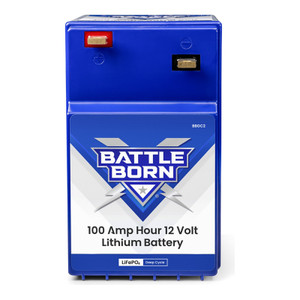 Battle Born 100Ah 12V LiFePO4 Battery (GC2)View part →
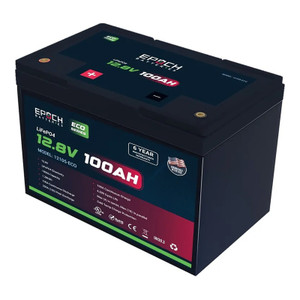 Epoch Eco 100Ah 12V LiFePO4 BatteryView part →
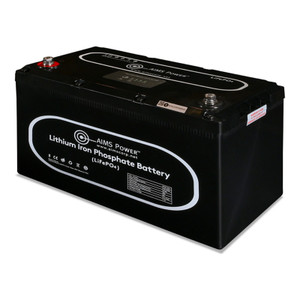 AIMS Power 104Ah 12V LiFePO4 Battery with Bluetooth and HeaterView part →
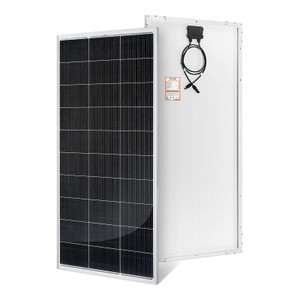 Rich Solar MEGA 200 200W 12V Solar PanelView part →
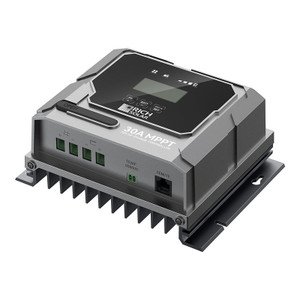 Rich Solar BRAVO 30A MPPT Charge Controller (Bluetooth)View part →
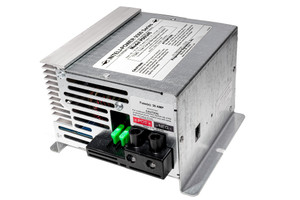 Progressive Dynamics PD9345V Converter/Charger (45 A)View part →
Shop by category: Lithium RV batteries, RV batteries, RV solar panels, Solar charge controllers, Converter/chargers. Make sure your converter or charger has the right charging profile for your battery type.
FAQ
Will a 100Ah battery run a 12V RV fridge?
For about a day. Furrion rates the Arctic 10 at about 49 hours at 77°F and 31 hours at 90°F on a 100 Ah battery, and that assumes the whole 100 Ah is usable (lithium). With lead-acid at 50%, plan on about half that.
How many solar watts do I need for a 12V fridge?
Roughly 160–250 W for an 8–10 cu ft fridge and about 500 W for a 15–20 cu ft fridge in 5 hours of sun. Plan more for winter, clouds or shade.
How many amps does a 12V RV fridge draw?
Running, usually 3–6 A for an 8–10 cu ft model, but the compressor cycles, so the daily average is lower. The label (11–19 A) is start-up or maximum draw.
Why does my 12V fridge shut off when the battery still shows charge?
Low-voltage cutoff. Voltage drop in the wiring or a lead-acid battery sagging under load can push the voltage at the fridge below its cutoff (10.4 V on Norcold, 9.6 V on Furrion Arctic 8/10).
Still stuck? Ask a tech with your model, serial number and what you’ve found. We’ll confirm the part before you order.
Figures from Norcold N8DC/N10DC and N15DC/N20DC owner’s and installation manuals, Furrion FCR08/10DCGTA, FCR16DCASA and FCR20DCAFA manuals, a Norcold N15DC sales sheet, Discover Battery and NREL. Ah/day and sizing math are our calculations.