8th Nov 2026
Replacing Your RV Refrigerator: Start Here (2026 Guide)
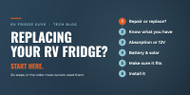
If your RV fridge just quit, or you are thinking about upgrading, you do not need to work it out from scratch. We have written a guide for every step of replacing an RV refrigerator. This page puts them in the order most owners need them, so you can start at Step 1 and stop when you have your answer.
The steps
Step 1: Decide whether to repair or replace
Many "dead" fridges only need a part. A failed power board, thermistor or igniter is an inexpensive fix. A failed cooling unit on an absorption fridge is different: the repair can cost close to a new refrigerator, so it is worth comparing before you spend anything.
- Not sure what failed? Look up the code on your display with the RV Fridge Error Code Tool.
- Then compare what each repair costs against a new absorption, 12V or residential fridge.
Read: Repair or Replace Your RV Fridge? What It Costs to Fix vs. a New Refrigerator
Step 2: Know what you have, and whether it is still made
Find the model number on the label inside the fridge compartment. It tells you which replacements are built for your cabinet opening and whether your current model is still in production. Norcold and Dometic have both renamed and discontinued a lot of models in the last few years.
- Current and Discontinued Norcold Refrigerators: Complete Replacement Guide (2026)
- Current and Discontinued Dometic RV Refrigerators: Complete Replacement Guide (2026)
- Dometic DM vs. RM models: what is the difference?
- The Norcold 1200/1210 is gone: the N15DCSS replaced it
- Norcold replacement refrigerator for the N811, N821 and N841
Step 3: Choose absorption or 12V compressor
This is the biggest decision. Absorption fridges run on propane or 120V and use almost no battery, which suits boondocking on a small battery bank. 12V compressor fridges cool faster, hold temperature better in heat and off level, and need no propane flame, but they draw steadily from your batteries.
Read: What Type of RV Refrigerator Is Best: DC Compressor or Gas Absorption?
Want to understand how the older technology works first? See How propane gas absorption RV refrigerators work.
Going from absorption to 12V? See Converting an RV absorption refrigerator to 12V.
Step 4: If you are going 12V, size your battery and solar
A 12V fridge only works as well as the power system behind it. Before you buy, check that your batteries, solar and wiring can carry the daily load, especially if you camp without hookups.
Read: How Much Battery and Solar Does a 12V RV Refrigerator Need?
Step 5: Make sure it fits your cabinet
Your cabinet opening decides what fits. Measure the opening (not the old fridge) and match it to a replacement built for the same cutout, so you avoid cutting cabinetry.
- RV refrigerator dimensions and cutout sizes for every Norcold, Dometic, Furrion, InVision and GE fridge
- Replacing a discontinued Norcold? How to find a replacement that fits your cabinet, or go straight to the Norcold Replacement Refrigerator Finder.
- Shopping by size? Use Find a Fridge by Size.
- Keeping an absorption fridge? Check Norcold vent cutout sizes (side and roof vents).
Step 6: Install it
Most replacements are a DIY job for a confident owner with a helper: disconnect power and propane, pull the old unit, check the vents and wiring, and slide the new fridge in.
Read: A DIY Guide to Replacing Your Norcold RV Refrigerator
Shop new refrigerators, or ask a tech
- New Norcold refrigerators
- New Dometic refrigerators
- New Furrion refrigerators
- New InVision refrigerators
- All RV refrigerators
Still not sure which one is right for your RV? Book a call with our tech support team and we will help you match a fridge to your opening and power setup.
Comparing brands?
Our sister site RVGuidance publishes an annual ranking of RV refrigerators, scored on longevity, repair cost and parts availability, including brands we do not sell: Best RV Refrigerators of 2026. RVGuidance and RV Fridge Guys are under common ownership.